
Menstrual health and hygiene (MHH) is fundamental to girls’ education, health, dignity, and gender equality. Yet, for millions of girls and women, menstruation continues to be shaped by limited access to affordable products, inadequate water, sanitation and hygiene (WASH) facilities, insufficient information and persistent stigma. Addressing these challenges requires more than individual interventions; it demands strong institutions, sustained investment, meaningful participation and collective action.
In Uganda and across East Africa, advancing menstrual health requires connecting policy commitments with the realities of girls and communities. At Irise Institute East Africa (IIEA), this approach informs our work to strengthen systems, build partnerships and support grassroots organisations to drive sustainable change.
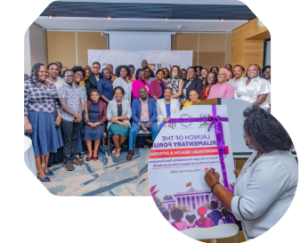
The formalisation and official launch of the Parliamentary Forum for MHH – Enhancing parliamentary leadership and accountability
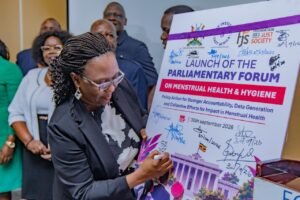
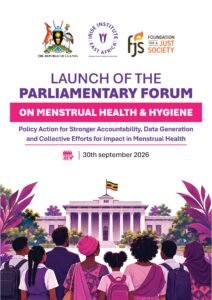
A significant milestone in Uganda’s MHH sector was the official launch of the Parliamentary Forum on Menstrual Health and Hygiene in Kampala on 30th September 2026. Constituted in 2024, the Forum provides a platform for parliamentary leadership, policy engagement, and accountability. IIEA serves as its technical partner, working alongside the Ministry of Education and Sports (MoES) Gender Unit and the Menstrual Health and Hygiene Coalition.
The launch brought together Members of Parliament, government representatives and civil society organisations to examine progress and identify priorities for advancing MHH. Discussions highlighted the need for dedicated financing, stronger institutional oversight, improved school sanitation facilities, affordable and quality menstrual products, and better coordination across sectors.
The urgency of this agenda is reinforced by findings from the 2024 Auditor General’s audit, which indicated that 64 per cent of female learners surveyed had missed school because of menstruation, while 46 per cent of schools visited lacked emergency menstrual supplies. These findings demonstrate the gap between policy commitments and implementation, underscoring the need for stronger monitoring, accountability and sustained public investment. Stakeholders also proposed considering the integration of MHH indicators into the Education Management Information System (EMIS) to strengthen monitoring of menstrual health support and facilities in schools.
The Annual Girls Agenda Conference – Elevating girls’ voices through regional collaboration
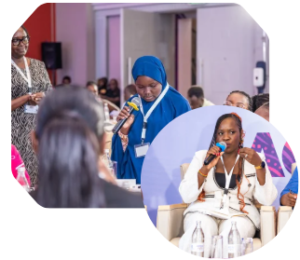
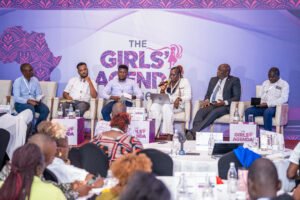
Sustainable progress must be informed by girls’ experiences and perspectives. At the 2026 Girls Agenda Conference in Nairobi, government representatives, civil society organisations, development partners and young people convened to explore how systems, partnerships and investments can advance girls’ wellbeing.
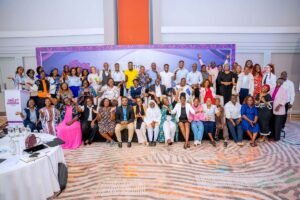
Through the conference’s MHH side event discussions, IIEA and members of The Period Equality Network (TPEN) contributed to conversations on strengthening accountability and collective action. Representatives from Uganda’s Ministry of Education and Sports and Ministry of Water and Environment shared progress made in advancing MHH. However, girls also highlighted persistent challenges, including broken toilet doors, unreliable water supplies, inadequate disposal facilities, unaffordable menstrual products and limited private changing spaces.
These contributions reinforced the importance of moving beyond policy commitments and ensuring that girls experience tangible improvements in their everyday lives. Their participation also demonstrated why girls must be recognised not merely as beneficiaries but as active contributors to the decisions and solutions that affect them.
TPEN movement-building: Investing in grassroots initiatives through the Small Grants Programme
Building a sustainable menstrual health movement requires strong grassroots organisations capable of translating shared commitments into community-level action. Through TPEN, hosted by IIEA, organisations working to advance menstrual health and period equality across East Africa connect, exchange knowledge, strengthen partnerships and contribute to collective advocacy.
The TPEN Small Grants Programme provides a practical example of this movement-building approach. By investing in grassroots organisations, the programme supports locally led initiatives that advance menstrual health at the grassroots. Beyond financial support, it creates opportunities to strengthen organisational capacity, amplify community voices, encourage collaboration and build the leadership of organisations working at the forefront of menstrual health advocacy.
With support from the Waterloo Foundation and Irise International, IIEA has supported more than 48 grassroots organisations within the TPEN network across East Africa. Through these initiatives, more than 70,000 people, including girls, women, boys and men, have been reached through menstrual product access, MHH education and awareness, community engagement and policy advocacy.
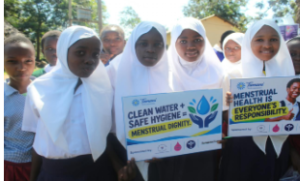
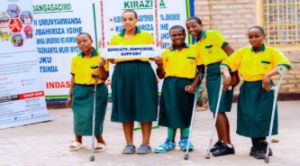
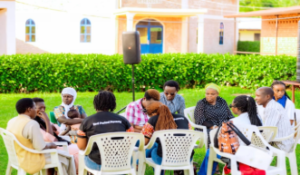
This approach recognises that lasting change cannot be driven by one institution alone. It depends on equipping local organisations, valuing their knowledge and creating opportunities for them to influence wider conversations, policies and practices. The Small Grants Programme therefore represents not only an investment in community initiatives but also in the strength and sustainability of the wider menstrual health movement.
Turning commitments to collective impact
The Parliamentary Forum on MHH, the Girls Agenda Conference and the TPEN Small Grants Programme illustrate three interconnected dimensions of advancing menstrual health: strengthening institutional accountability, elevating girls’ voices and investing in grassroots leadership.
Together, they demonstrate that sustainable progress requires more than isolated interventions. It calls for government leadership and financing, policies translated into practice, meaningful participation of girls, stronger partnerships and sustained investment in organisations driving change within their communities.
For IIEA, strengthening these connections remains central to advancing menstrual health and equality. By bringing together policymakers, civil society, development partners, grassroots organisations and communities, we can build a movement that not only advocates for change but also contributes to making that change possible.
Every girl deserves to learn, participate and thrive without menstruation becoming a barrier to her dignity or potential. Moving beyond commitments towards collective action is essential to making this a reality.
Written by Georgina Asizu
Programs Officer – Partnership, Communication and Advocacy
Irise Institute East Africa.